How AI Conversations Fix Pronunciation at Work
AI conversation tools give real-time pronunciation feedback, role-based practice, and progress tracking to improve clarity at work.

If people aren’t clear when they speak at work, mistakes, delays, and safety issues can follow. I’d sum up the article this way: AI conversation tools help staff fix pronunciation while they speak, practise job-specific phrases, and track improvement over time.
Here’s the core idea in plain English:
- Pronunciation affects job performance, not just language learning
- Work pressure makes speech errors worse, even when someone knows the right words
- AI can flag issues right away in sounds, stress, rhythm, pacing, and intonation
- Short repeat practice helps staff fix errors in the moment
- Role-based scenarios make practice match the job
- Progress tracking helps staff and managers see what is changing
A few numbers stand out:
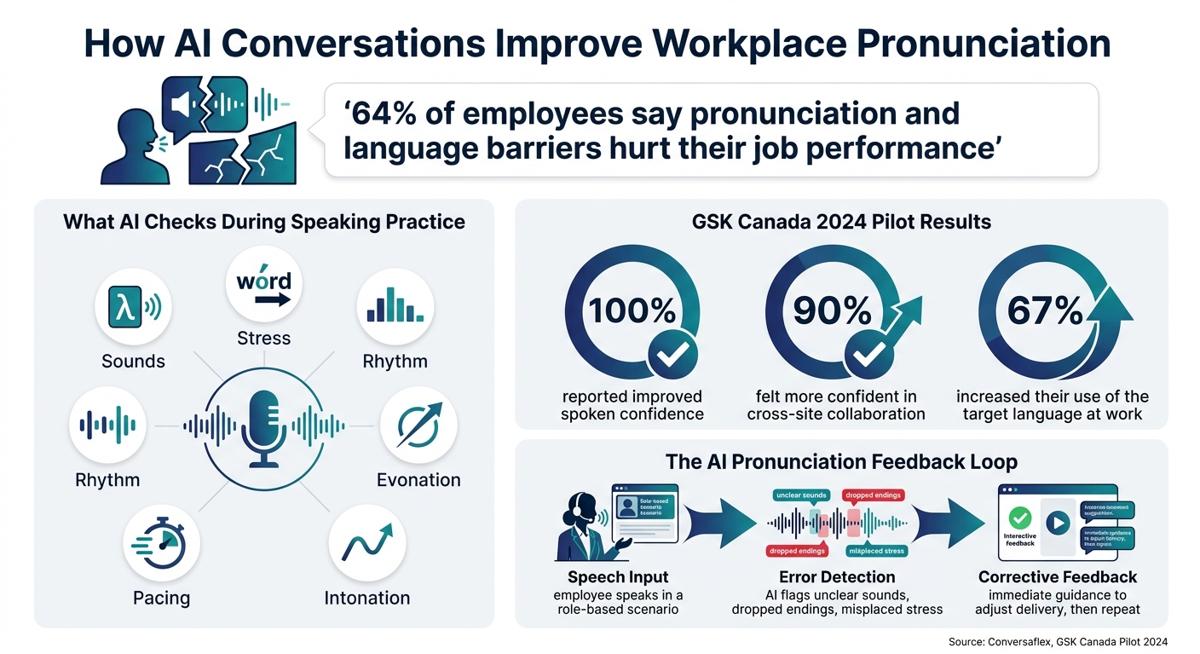
- 64% of employees say pronunciation and language barriers hurt their job performance
- In a 2024 GSK Canada pilot, 100% of participants reported better spoken confidence
- 67% said they used the target language more at work
- 90% felt more confident working across sites
What matters most to me is simple: this is not about changing someone’s accent. It’s about helping people speak clearly in meetings, safety briefings, client calls, and day-to-day conversations.
The article then explains how these tools spot speech issues, guide repeat practice, and tie training to the words people use on the job.
Perfect Pronunciation, Powered by AI - Koel Labs
These tools speed up student progress by providing immediate, actionable feedback.
Why Pronunciation Breaks Down at Work
Employees can know the right words and still say them the wrong way when the pressure kicks in. At work, pronunciation stops being just a language issue and becomes a performance issue.
Common Speech Issues That Affect Daily Tasks
A common reason is first-language interference. By adulthood, first-language sound patterns often become fixed, so people carry those patterns into English or French. That can lead to accent patterns and pronunciation mistakes that make speech less clear.
Stress and rhythm mistakes can also make speech harder to follow, especially during shift handoffs, client calls, and team standups.
Why Workplace Pressure Makes Speech Errors Worse
AI vs. traditional language training differs because classroom practice doesn't fully match what happens on the job. When someone is presenting to leadership or handling a client call in a second language, they're dealing with a heavy cognitive load at the same time: searching for vocabulary, building sentences, and tracking the conversation [2][4]. Stress, self-consciousness, and fear of mistakes can interrupt language processing [3].
When employees start worrying about whether people understand them, they often hold back instead of speaking up.
These are the moments when AI conversations can spot problems in real time and turn them into targeted pronunciation feedback.
How AI Conversations Detect Speech Errors
From Speech Input to Pronunciation Feedback
When an employee speaks, the system analyses the audio, compares it with expected pronunciation patterns, and flags mismatches in real time. Feedback shows up after each spoken turn, so the person can fix the issue during the conversation instead of waiting until the end.
That matters because the correction is tied to the exact phrase they just said. It’s immediate, specific, and linked to the task in front of them.
The speech recognition model is trained to tell the difference between a natural accent and a pronunciation issue that affects clarity. For multilingual teams, that line is a big deal. People may sound different from one another, but the goal is to flag what makes speech harder to understand, not erase how someone naturally speaks.
What the System Can Detect During Speaking Practice
The AI checks five areas:
- sounds
- stress
- rhythm
- pacing
- intonation
If an employee rushes a phrase, drops an ending, or stresses the wrong syllable, the system flags it right away and shows the correction.
The table below shows how each stage connects to a clear outcome for the learner:
| Stage | What Happens | What the Learner Gets |
|---|---|---|
| Speech Input | Microphone captures audio during a role-based scenario (e.g., a safety briefing or client call) | Real-time interaction with an AI agent |
| Error Detection | AI compares audio to expected phonetic patterns, stress, and rhythm | Flags on unclear sounds, dropped endings, or misplaced stress |
| Corrective Feedback | System evaluates pacing and intonation against expected patterns | Immediate guidance on how to adjust delivery |
Once the system flags an error, the learner repeats the phrase with corrective guidance.
For Québec teams, the model can be trained on regional French accents, so the feedback fits the local business setting. And if a company uses specific terminology, the system can be trained on those terms too, so those words are part of the pronunciation analysis.
Repeat Practice with Corrective Feedback
How Guided Repetition Improves Speech Clarity
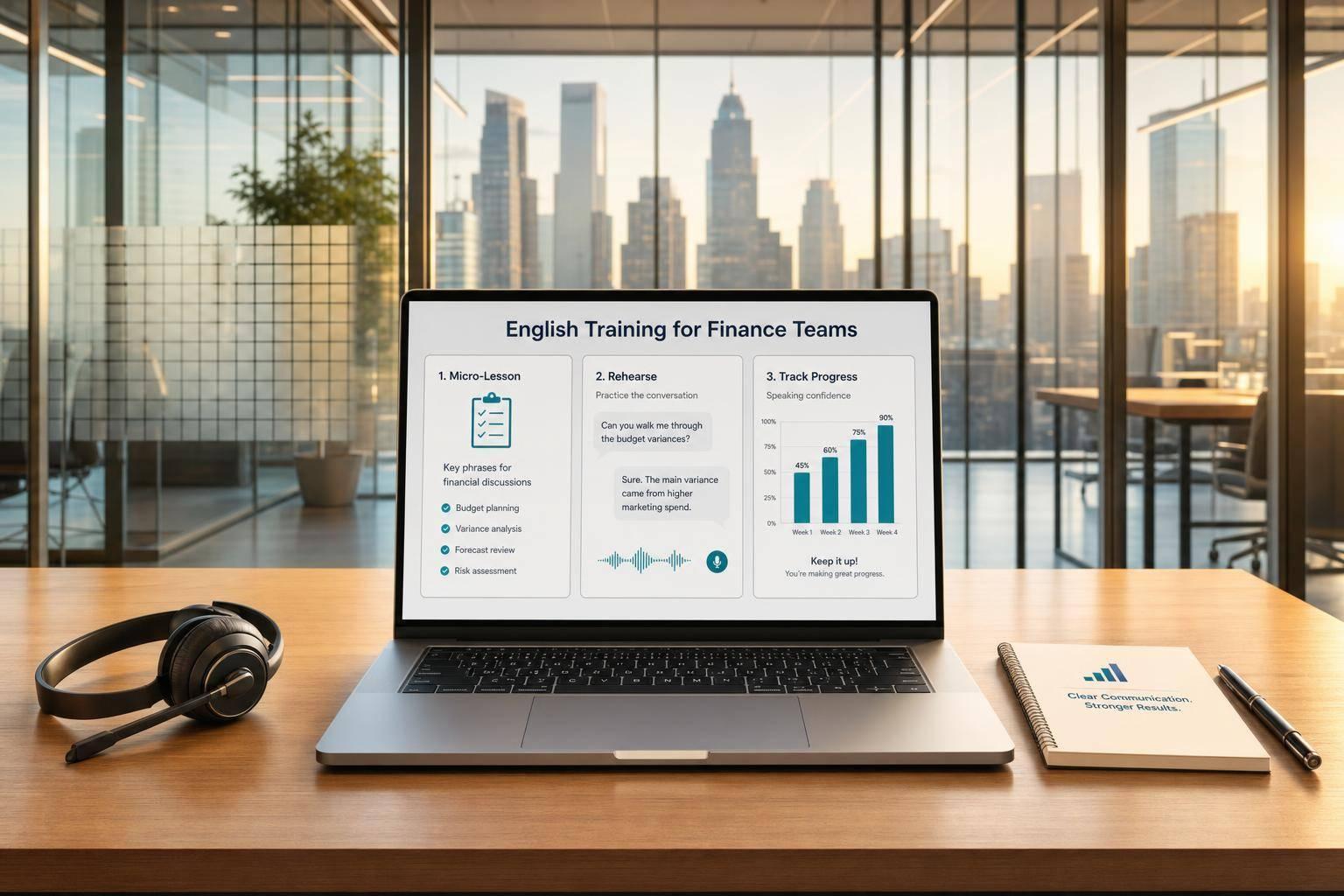
Employees should repeat the phrase right away, using the flagged error to adjust how they say it [2]. Then they should do a second pass through the same situation without a script. The first pass helps with word-finding. The second helps smooth out clarity and flow [2].
This works best when the repeated phrase comes from the employee’s actual job, not a generic sample.
In a 2024 pilot at GSK Canada, 100% of participants reported improved spoken confidence after role-tailored AI conversation practice, and 67% increased their actual use of the target language at work [1]. Those same practice sessions should also feed progress tracking for both staff and managers, a key advantage when comparing AI vs. traditional language training for teams.
How Short Practice Sessions Fit Into the Workday
Short daily sessions help practice stick [2]. A simple routine can include:
- reviewing problem words
- practising key workplace phrases
- revisiting past errors
- completing one realistic scenario
Employees can fit these sessions into their normal workday at any time, without scheduling constraints [1]. That matters because practice is far more likely to happen when it fits the rhythm of the job instead of interrupting it. The next step is to connect those sessions to role-based dialogues and clear progress over time.
Role-Based Dialogues for Real Work Tasks
Pronunciation practice lasts when it sounds like the work employees actually do.
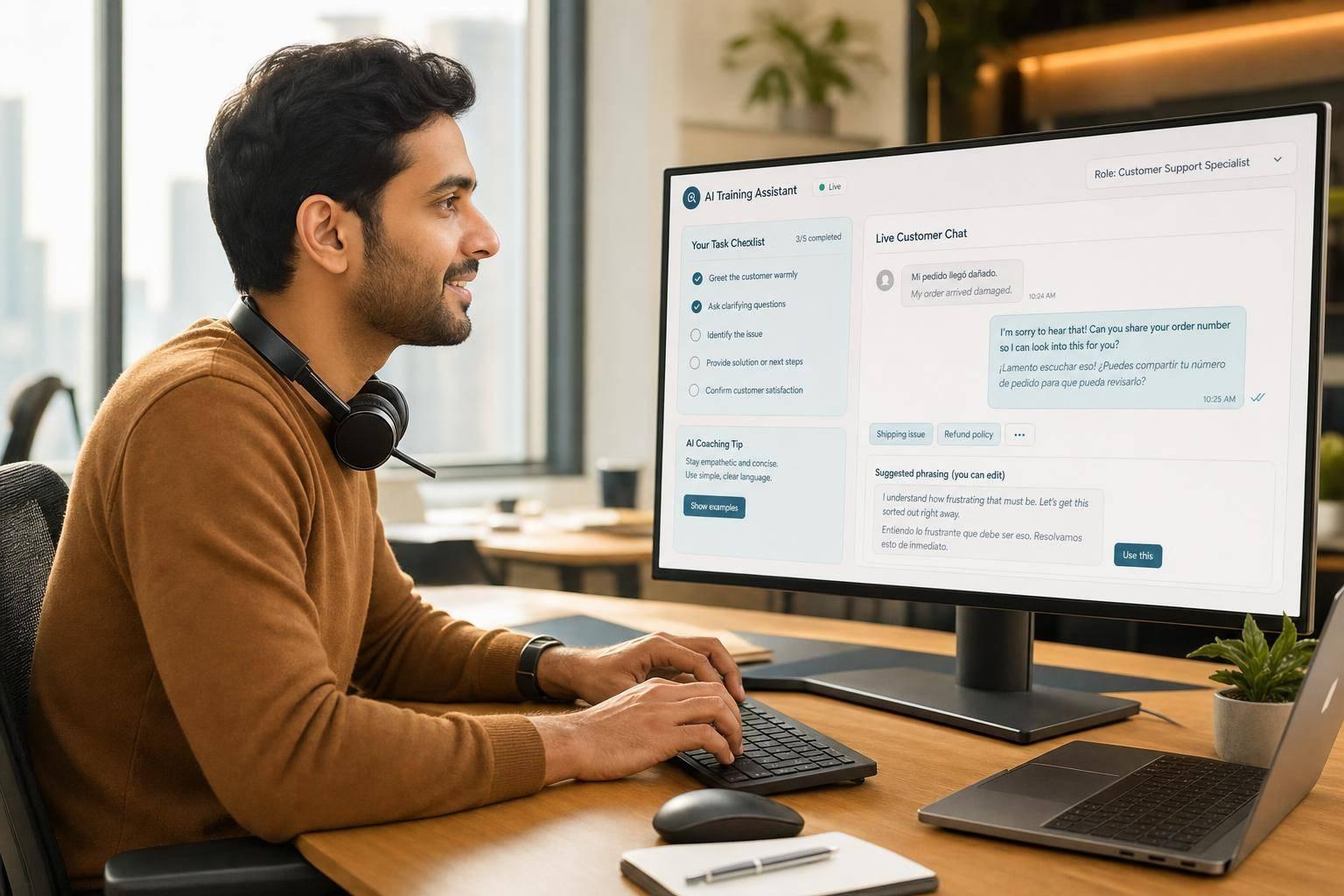
Role-based dialogues built around safety briefings, client calls, shift handoffs, and performance reviews make sure the language used in practice matches the language needed on the job. That connection is a big deal. Repeating a phrase from a real scenario, rather than a generic drill, helps build both accuracy and confidence when the pressure is on.
Tracking Progress for Staff and Managers
Practice sessions produce data that employees and managers can use. Tracking repeated error patterns, improved clarity scores, words mastered, and time spent practising gives staff a clear view of what’s getting better and shows managers where support is still needed.
Visible progress also makes it easier to spot who is ready for higher-stakes communication and where more practice makes sense.
Role-Based Dialogues and Progress Tracking for Staff and Managers
Role-Based Workplace Dialogues Tied to Real Tasks
The best speaking practice isn't generic. It should match the job people do every day.
That means using task-based dialogues that train the words, pacing, and stress patterns each role uses most. When practice sounds like the work itself, people can use what they learn right away.
| Workplace Scenario | Task Example | Pronunciation Focus |
|---|---|---|
| Customer Service | Handling complaints or greeting clients | Intonation, politeness markers, clarity |
| Healthcare Support | Confirming appointments or patient updates | Medical terminology, vowel precision |
| Operations/Safety | Giving instructions or safety briefings | Pacing, word stress, clear communication required |
| Internal Comms | Reporting updates in standups or town hall meetings | Fluency, rhythm, confidence in delivery |
Each scenario mirrors a real task. So the same practice can also support tracking on the words, sounds, and phrases that need the most work.
Conversaflex can be trained on an organization's own company terminology and role-specific content, including product names and processes, so practice stays tied to the language employees run into every day [1].
What Progress Tracking Should Show
Once practice is tied to real tasks, the next step is simple: measure what changes.
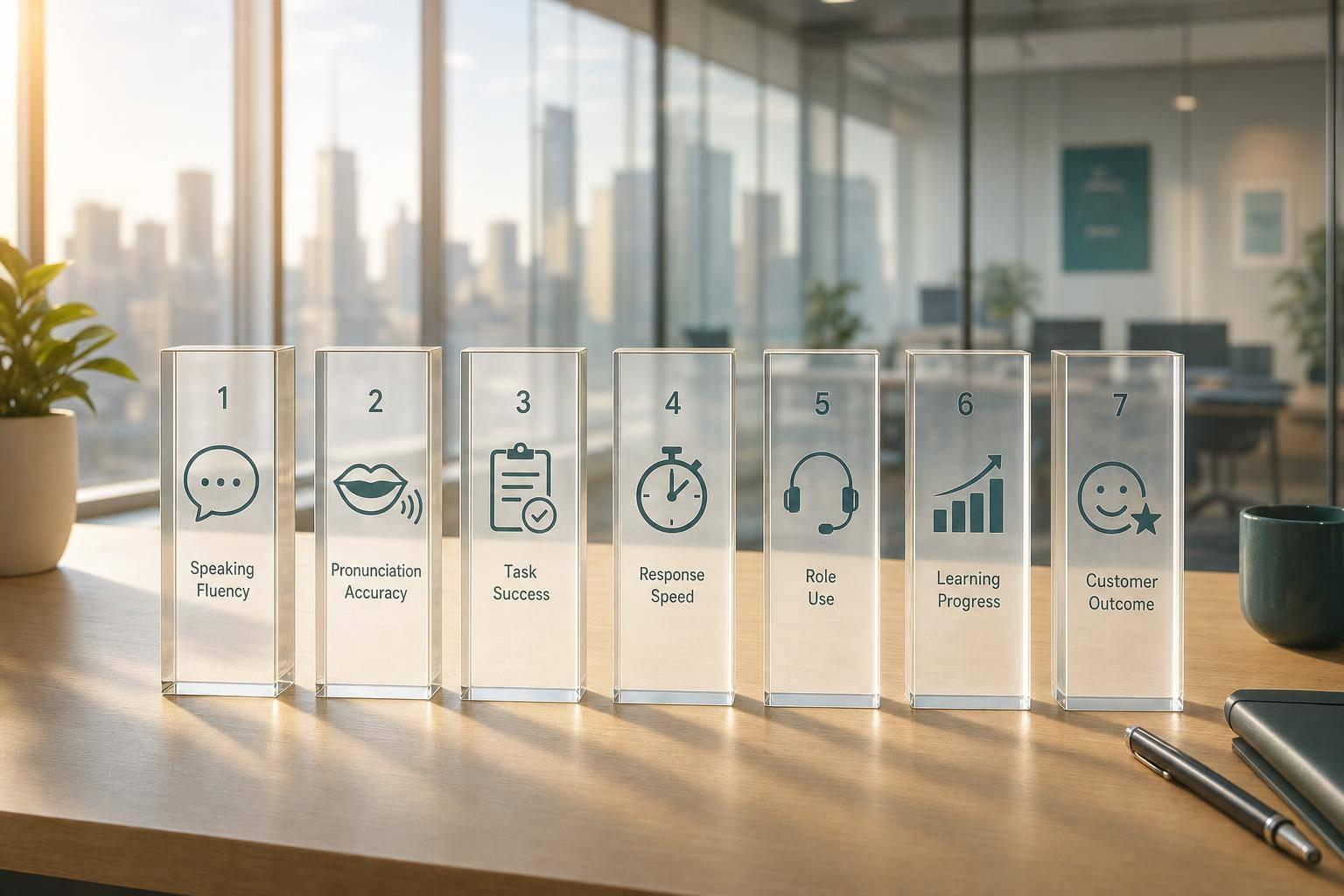
Tracking should show exactly what's getting better. Dashboards should make it easy to spot error patterns, practice frequency, and clarity gains over time.
For managers, this data should point to where support is still needed, not act like an audit. In GSK Canada's 2024 pilot with Conversaflex, 100% of participants reported improved confidence, 90% felt more confident in cross-site collaboration, and 70% increased their use of French at work [1].
Conclusion: Clearer Speech Through Practice, Relevance, and Measurement
Pronunciation issues rarely disappear just because work gets busy. People need focused practice, realistic scenarios, and feedback that shows what's changing.
Task-based dialogue gives the system something concrete to measure. AI conversations help by processing speech in real time, flagging specific errors, and simulating the kinds of exchanges employees face every day.
"Clear workplace communication isn't about changing someone's accent. It's about helping employees be understood in meetings, presentations, client calls, and everyday conversations." - Conversaflex [2]
Clearer pronunciation comes from practice that fits the job, corrects errors in real time, and tracks change over time.
FAQs
How does AI tell accent from unclear pronunciation?
AI looks at sounds, stress, rhythm, pacing, and intonation to spot what affects clarity. It separates accent from unclear pronunciation by focusing on one thing: whether speech is easy to understand, not on getting rid of someone’s accent.
In the workplace, Conversaflex gives immediate, targeted feedback so learners can improve clarity and communicate better in professional situations.
Can AI pronunciation practice fit into a busy workday?
Yes. AI pronunciation practice fits into a busy workday because it’s available 24/7. There’s no need to book sessions or line up time with a live tutor.
Short 10–15-minute practice blocks work well for fixing problem words, rehearsing role-specific phrases, and running through quick job scenarios. Automated reminders and calendar integrations can also help turn practice into a steady part of the day.
What should managers track in pronunciation training?
Managers should track dashboard data and focus on stats that show what’s happening on the job. That includes less repetition, better meeting participation, smoother customer interactions, successful completion of realistic work scenarios, and use of the vocabulary tracker for problem words.
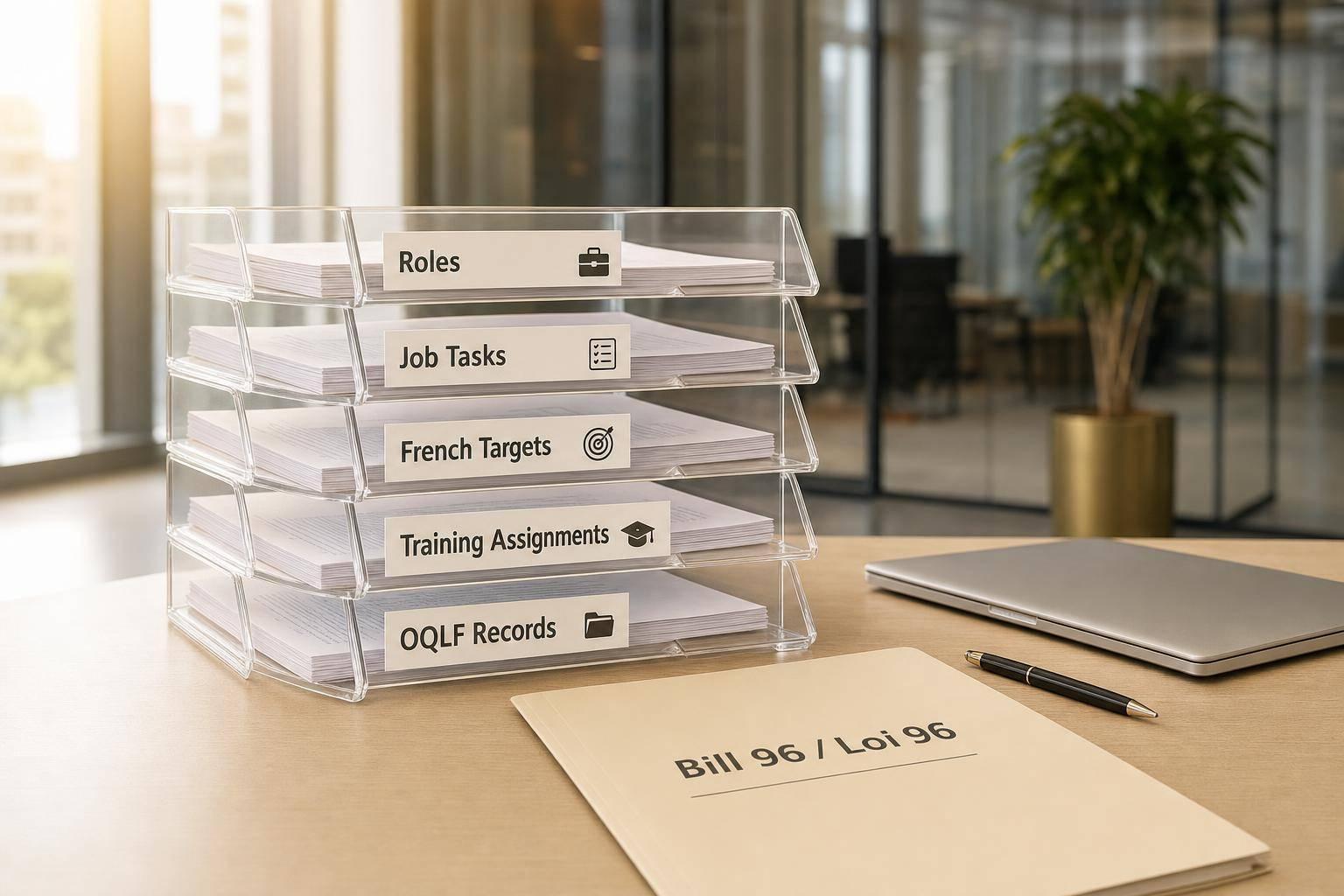
In regulated markets, they should also track employee training hours and produce compliance-grade documentation, such as OQLF-aligned reports.