English Training for Finance Teams
Role-based English training for finance teams: short job-focused practice, AI rehearsals, and measurable work outcomes.
If finance staff can’t explain numbers clearly, work slows down fast. In this article, I show that finance English training should focus on the job itself: reports, forecasts, audits, emails, client calls, and short AI practice tied to daily tasks.
Here’s the core idea in plain terms: I would not run a generic business English course for a finance team in Canada. I would start with the roles, find the communication gaps that create risk, and train people on the tasks they already do. That matters even more in Canada, where teams often work across provinces, support US stakeholders, and, in Quebec, need to keep Bill 96 in mind.
The article boils down to a few points:
- Role matters: controllers, FP&A staff, and client-facing finance teams use English in different ways
- Weak language has a cost: the article cites 64% of employees saying language barriers hurt job performance
- Training should match finance work: variance commentary, audit replies, budget meetings, and client calls
- Short sessions fit better: 10- to 20-minute practice blocks work better around close cycles
- AI vs. traditional language training helps on the job: teams can rehearse finance scenarios before live meetings and calls
- Results should be tracked by job output: clearer commentary, fewer follow-up emails, and better meeting participation
I also see one clear message throughout the piece: course completion is not the goal. Better performance at work is.
That’s the lens I’d use for the rest of the article.
English in Finance: Meeting Phrases | Conversation Listening
How to Set Up an English Training Program for Finance Teams
The setup decides whether people will use the training or ignore it. If the program is built around the wrong tasks, or launched during month-end close, it will get pushed aside. So the starting point should be the work itself, not a generic course plan.
Assess Roles, Levels, and Priority Communication Tasks First
After you've flagged the main finance risks, connect them to the roles that deal with them most often.
Start with a needs analysis, not just a language test. A CEFR placement test can show someone's level, but it won't show whether they can explain a budget delay or lead a meeting. That's the gap that matters on the job. Pair the baseline check with a role-by-role review of communication tasks.
For each finance role, pinpoint the two or three tasks where a language gap creates the most risk. Use real emails, reports, and meeting notes. That way, the weak spots show up in day-to-day work instead of in abstract exercises.
A Confidence Scorecard can help here too. It's a short questionnaire that shows where language insecurity affects participation in onboarding, feedback sessions, or client-facing interactions, so you know where to focus first [2].
Build Training Around Finance Workflows, Not Generic Skills
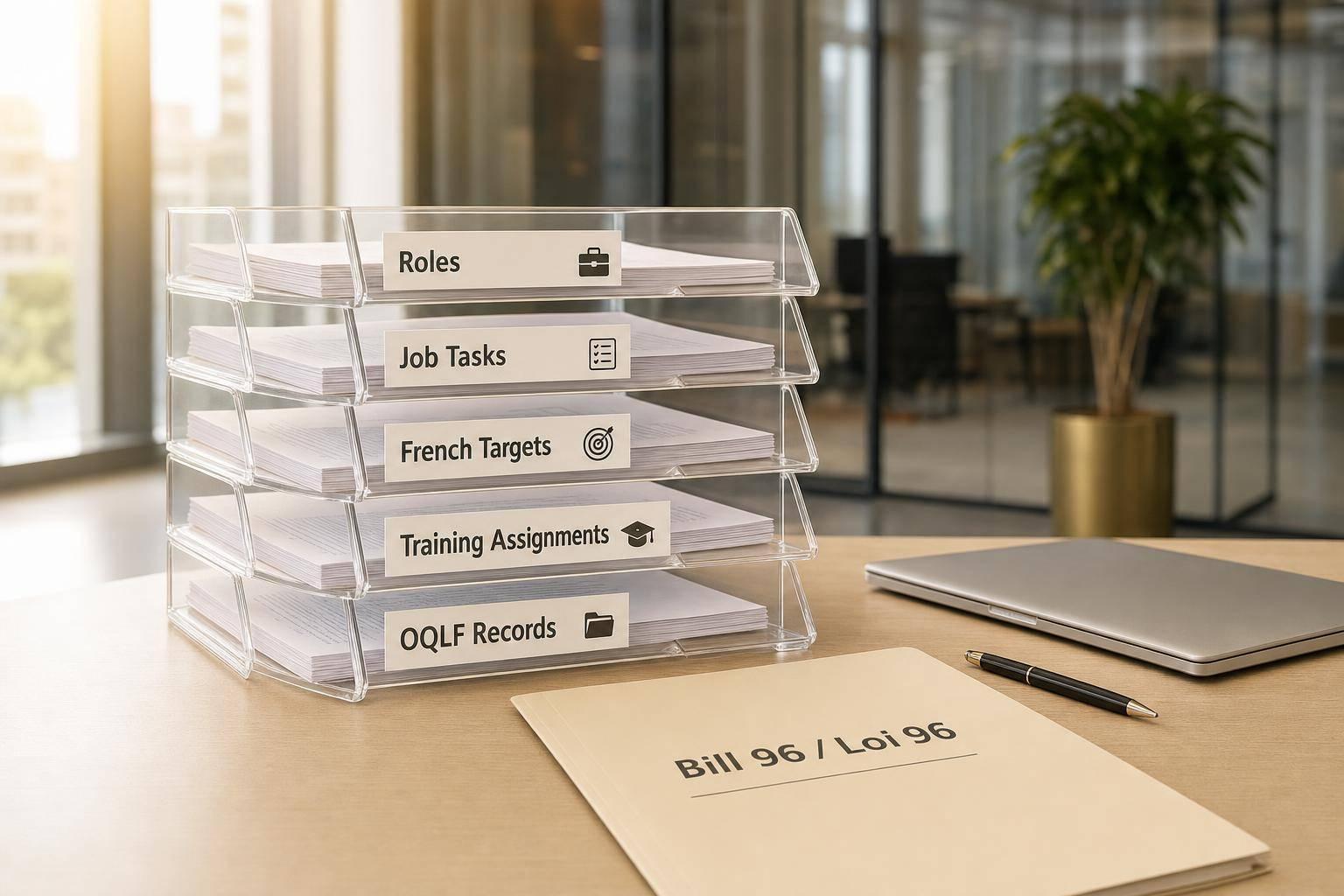
Once the gaps are clear, group the training into modules that match how finance teams work: reporting commentary, meeting participation, audit requests, budget meetings, and client calls. Each module should reflect the terms, formats, and situations employees deal with every day.
Canadian formatting should be part of the training, not tucked away in a separate grammar lesson. Practise writing amounts like $12,345.67 CAD, dates like September 30, 2026 or 2026-09-30, and reading figures out loud in meetings and calls.
A controller who can write clear reporting commentary and speak with confidence in cross-site collaboration is more useful than one who simply does well on a grammar test.
Roll Out Training Without Disrupting Close Cycles
The rollout model matters just as much as the content. Start small: one team, one role, then scale from there. Plan sessions around the finance calendar and stay clear of the busiest close periods, especially month-end.
Short daily sessions of 10 to 20 minutes tend to work better for finance teams than weekly two-hour blocks. They fit into the workday and don't compete as directly with close cycles [1][5].
Set role-based goals from day one. Track progress by what employees can do in meetings and client calls, not by whether they finished a course.
With roles, workflows, and timing set, the next step is the language finance teams use every day.
Core English Skills Finance Teams Use Every Day
With the training structure in place, the next step is simple: focus on the English finance teams use every day.
Reporting Terms and Numerical Commentary
Finance teams need role-specific English to explain results, variances, cash flow, forecasts, and month-end numbers with clarity. That means saying what changed, why it changed, and what it means for decisions.
Weak language muddies the point. Strong language names the change and the cause.
That same need for clarity shows up in meetings too, but the tone shifts depending on who’s in the room.
Meeting Language for Forecasts, Reviews, and Audits
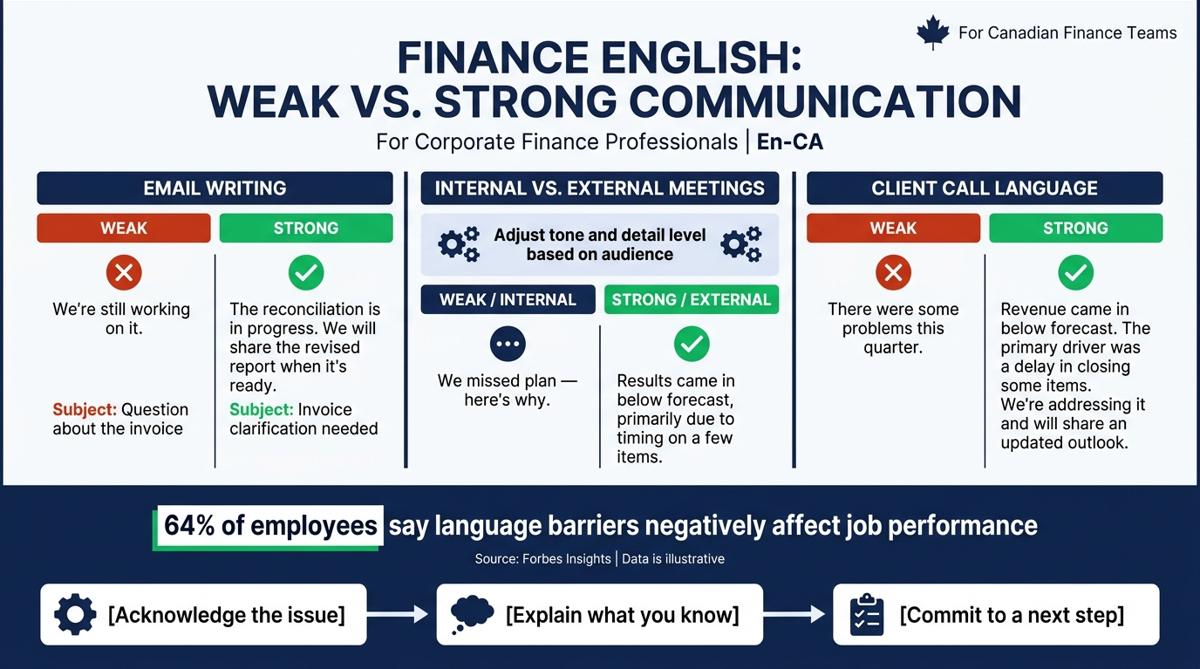
Internal budget reviews and external updates call for different levels of detail. Audience-based tone shifts - adjusting your level of detail depending on the audience - is a core professional skill, not just a language one [5].
| Situation | Internal Meeting Language | External Stakeholder Language |
|---|---|---|
| Presenting a variance | We missed plan - here's why. | Results came in below forecast, primarily due to timing on a few items. |
| Flagging a risk | This number looks off. Can someone double-check it? | We'd like to confirm the underlying assumptions before finalizing this figure. |
| Confirming next steps | We'll send the update. | Our team will provide a revised analysis by the agreed deadline. |
| Challenging an assumption | That growth rate seems high. What's it based on? | Could you walk us through the basis for that projection? |
Audit meetings add one more layer. Auditors tend to ask specific, document-based questions, so answers need to be precise and limited to the facts.
The same pattern carries into writing and calls: state the issue, the action, and the deadline.
Email Writing and Client Call Communication
Finance emails and client calls work best when they get to the point: state the issue, spell out the action needed, and give the timeline.
| Context | Weak | Strong |
|---|---|---|
| Email subject line | Question about the invoice | Invoice clarification needed |
| Referencing a delay | We're still working on it. | The reconciliation is in progress. We will share the revised report when it's ready. |
| Closing an email | Let me know if you have questions. | Please confirm receipt and advise if any figures require clarification. |
| Routine call - confirming a figure | Yeah, I think that's right. | I can confirm the balance as of the latest close is correct. I'll follow up in writing today. |
| High-stakes call - explaining a shortfall | There were some problems this quarter. | Revenue came in below forecast. The primary driver was a delay in closing some items. We're addressing it and will share an updated outlook. |
On client calls, a direct but polite tone usually works best. Start by acknowledging the issue. Then give a clear reason and commit to a specific next step. If you hedge too much, the client may lose confidence. If you’re too blunt, you can sound dismissive. A dependable structure is to acknowledge the concern, explain what you know, and say when you’ll have a complete answer.
These are the exact patterns AI practice should reinforce in daily finance scenarios.
How to Use AI Practice to Build Finance English on the Job
With the core finance phrases in place, AI practice helps turn them into repeatable drills that fit day-to-day work.
Daily Practice Scenarios That Match Real Finance Work
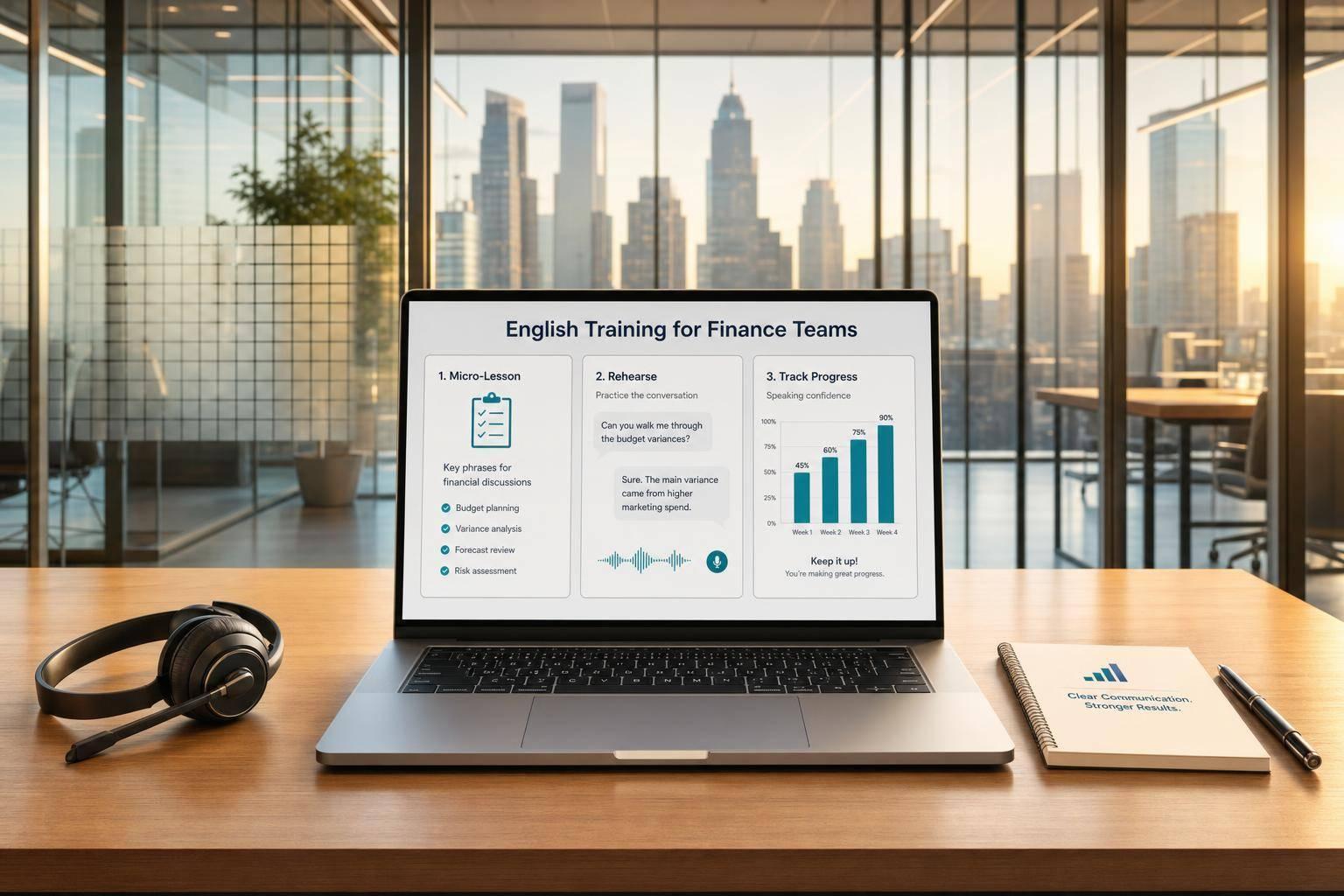
AI practice gives finance professionals a way to rehearse real conversations before they happen. That might mean explaining a variance, preparing an audit response, handling a payment delay, or following up with a client. The best scenarios line up with finance tasks the team already does.
These drills can fit between close tasks and be repeated when needed. Since the scenarios are tied to each role, the time spent has a clear use right away [1][4].
Pronunciation feedback on stress and intonation also helps staff sound clear on calls and in presentations [1][2].
That is where a system built for role-based practice becomes useful.
Where Conversaflex Fits for Canadian Finance Teams
Conversaflex is an AI-powered business language training platform. For finance departments, it offers role-based practice scenarios, company-specific terminology training, pronunciation feedback, and progress tracking so managers can see where employees are improving over time.
For Canadian organisations, Conversaflex also supports Bill 96 / OQLF-ready compliance needs and can scale from small finance teams to large rollouts.
In a 2026 pilot with GSK Canada, Conversaflex was used to strengthen communication and internal talent mobility. All participants showed measurable improvement in spoken confidence, and 90% reported greater confidence collaborating across sites [1].
The value shows up in work output, not course completion.
How to Measure Outcomes Beyond Course Completion
Completion rates show attendance, not performance. What matters more is task performance: clearer report commentary, fewer follow-up emails, stronger meeting participation, and manager-rated improvement [2][3].
It also helps to track practice frequency and conversation counts through dashboard data. That gives teams a view of both effort and results without relying only on self-reporting [1][2].
When 64% of employees report that language barriers negatively affect their job performance [2], the main test is simple: can they do the job better in the language?
Conclusion: What a Finance English Program Should Include
A strong finance English program starts with a role-specific needs analysis. The goal is simple: find the communication risks that show up in reporting, audits, forecasts, and client calls.
From there, training should match the job itself. That means practising the kind of work finance teams do every day: numerical commentary, meetings, email, and client calls.
Keep the practice short and easy to fit into the day. 10- to 20-minute sessions around close cycles work well, especially when paired with AI feedback and outcome tracking tied to job performance [1][3][5].
For Canadian finance teams, that mix turns language training into measurable performance gains.
FAQs
How do we assess finance English needs by role?
Move past generic language tests and look at job-specific results instead. Start with the day-to-day work each finance team member needs to handle, like explaining reporting terms, leading client calls, or talking through budgets.
Then review where language friction shows up in meetings or email writing. That makes it easier to spot whether someone needs more help with financial vocabulary, pronunciation, or speaking on the fly during high-stakes calls.
What should we measure besides course completion?
Look beyond course completion and track workplace communication impact.
What does that mean in practice? Measure how often people use what they’ve learned, how they perform in day-to-day work situations, and whether they’re speaking up with more confidence.
Focus on progress in role-based scenarios such as:
- meetings
- client calls
- onboarding
- feedback conversations
It also helps to track confidence and participation, not just task completion.
And don’t rely only on CEFR levels or test scores. Use dashboards that show day-to-day progress, including progress tracking, practice statistics, and vocabulary retention. That gives you a much clearer picture of whether learning is showing up at work.
How can we fit training around month-end close?
Build training into the workday instead of leaning on set workshops or long courses that collide with month-end close.
With Conversaflex, finance teams can fit in short, role-based practice whenever they have a few spare minutes. It’s on hand 24/7, so they can keep building skills even during busy reporting periods.