
Best Corporate Language Learning Platforms 2026: Complete Comparison
Compare the top corporate language learning platforms in 2026 — Conversaflex, Preply Business, Duolingo for Business, Babbel for Business, Rosetta Stone Catalyst, Lingoda Teams, Berlitz Connect. Pricing, AI features, compliance, and how to choose for your team.
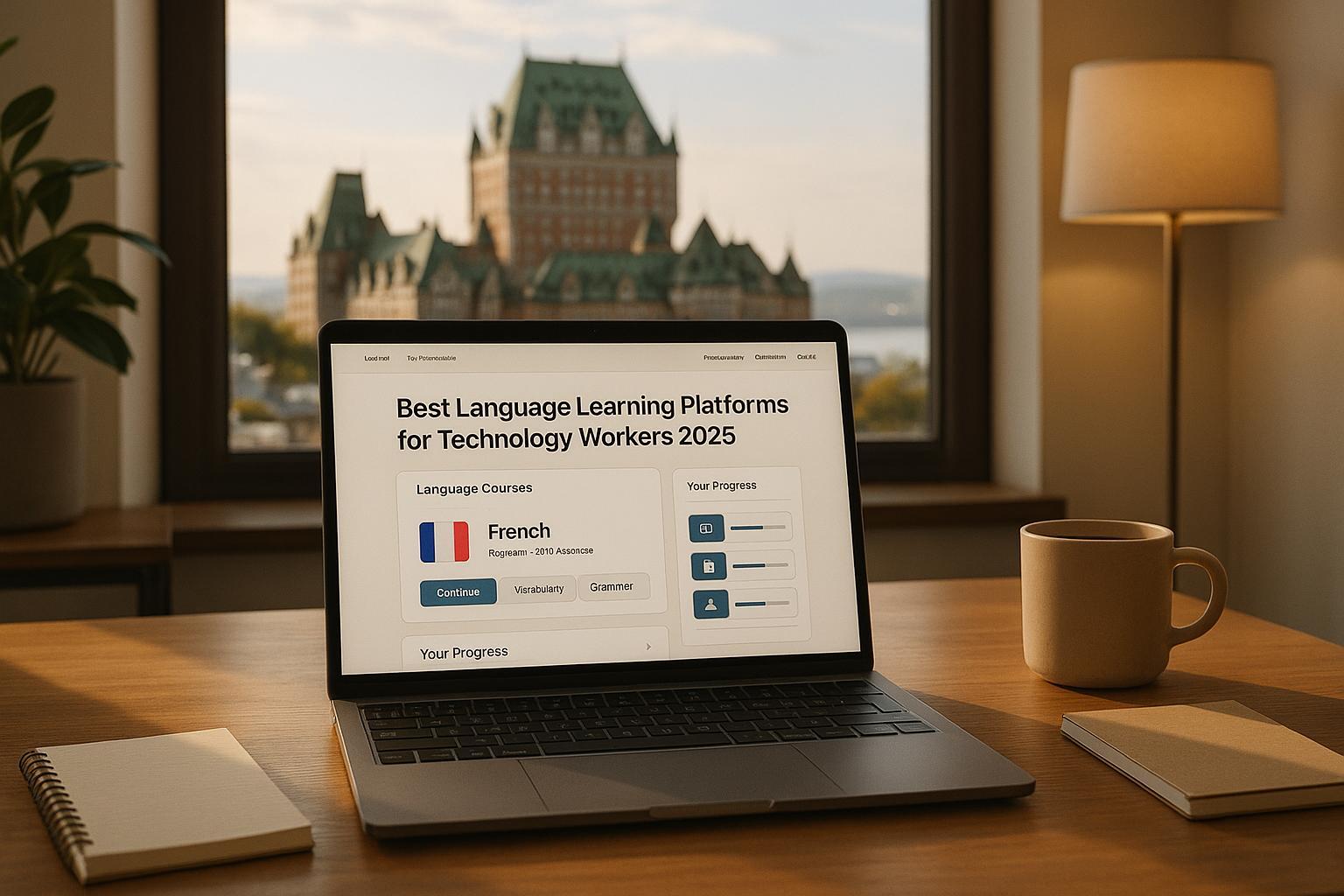
Best Corporate Language Learning Platforms 2026
Looking for the best corporate language learning platform for your team in 2026? This comparison covers the seven platforms most frequently shortlisted by HR and L&D leaders — what each one is good at, how they're priced, and which one fits which type of company. We've focused on the criteria that actually matter for B2B buyers: AI personalization, scalability, admin reporting, regulatory compliance (Quebec Bill 96, France TCF IRN), and total cost of ownership.
Want to skip the comparison and try one? Take a free 5-minute conversation with Conversaflex's AI tutor — no signup required.
TL;DR — Comparison at a Glance
| Platform | Best for | AI personalization | Workplace context | Compliance reporting | Starts at (per learner / month) |
|---|---|---|---|---|---|
| Conversaflex | Quebec Bill 96 + workplace fluency at scale | ✅ Adaptive AI tutor | ✅ Industry- and role-specific scenarios | ✅ OQLF-ready reports | from ~$15 |
| Preply Business | Live tutoring with human teachers | Limited (matches users to tutors) | Tutor-led, customizable | Manual reporting | from ~$25 |
| Duolingo for Business | Casual broad exposure | Adaptive lessons | ❌ Consumer content | ❌ | ~$10 |
| Babbel for Business | Conversational basics | Limited adaptive | Some workplace topics | ❌ | ~$13 |
| Rosetta Stone Catalyst | Established global enterprises | Limited (immersive method) | Some role tracks | Basic reporting | Quote-only |
| Lingoda Teams | Live classes + flexibility | Class-based | Some business modules | Class attendance only | ~$30 |
| Berlitz Connect | Premium executive coaching | ❌ Human-led | ✅ Tailored programs | Manual | Quote-only |
Quick verdict:
- For Quebec/Canadian businesses with Bill 96 obligations: Conversaflex — built for OQLF reporting and the Quebec Francisation Scale
- For occasional learning and culture perks: Duolingo or Babbel (low cost, low intensity)
- For premium executive 1:1 coaching budgets: Berlitz or Preply Business
- For mid-market teams that want AI + structure without a per-tutor cost: Conversaflex, Babbel, or Rosetta Stone
What to Look for in a Corporate Language Platform
Before comparing the platforms, here's the criteria checklist most B2B buyers use:
- Relevance to your context — generic vocabulary helps no one. Look for industry- and role-specific scenarios (sales calls, healthcare interactions, engineering meetings, etc.)
- Personalization — adaptive content based on each learner's level and goals beats one-size-fits-all curricula
- Speaking practice at scale — listening and reading are easy to deliver; speaking practice is the bottleneck. AI tutors solve this without per-learner tutor cost
- Admin tooling — multi-seat dashboards, progress tracking, group reports, SSO/SAML
- Compliance and certification reporting — for regulated markets (Quebec Bill 96, France's new TCF IRN requirements, US healthcare ESL)
- Cost predictability — flat per-seat pricing scales better than per-hour tutoring fees as your team grows
- Adoption / engagement design — a platform employees won't open is wasted budget. Look for measurable practice-day metrics
1. Conversaflex
Conversaflex (formerly Francoflex) is an AI-powered language learning platform built for B2B teams, with a particular strength in Quebec Bill 96 compliance and structured workplace French and English training.
What it does well
- AI conversation tutor: unlimited speaking practice with an AI partner that adapts to each learner's level and role
- Industry-specific content: built-in tracks for healthcare, pharmaceuticals, engineering, technology, and more
- Compliance-grade reporting: progress tracking aligned with the Quebec Francisation Scale (Levels 1–12) and CEFR (A1–C2) — exportable for OQLF audits
- Multilingual support: French, English, Spanish, with more languages on the roadmap
- Pronunciation tool: separate pronunciation practice with detailed feedback (rare in this category)
- Learning objectives: managers can set personalized objectives per learner; learners can also self-define them
Where it fits
Best for Canadian and international companies with regulated language requirements (Bill 96, France TCF IRN), or any team that needs measurable speaking progress for client-facing roles. Strong fit for HR and L&D teams who need defensible reporting.
Pricing
Three tiers: Basic (small teams), Business (compliance-focused), Enterprise (unlimited scale). Per-seat pricing starts around ~$15/learner/month with volume discounts.
See pricing → | Try a free 5-minute conversation →
2. Preply Business
Preply Business connects employees to a marketplace of human tutors for live 1:1 lessons. The marketplace model means broad language and tutor coverage but can produce inconsistent quality and uneven progress across a team.
Strengths
- Massive tutor pool across dozens of languages
- Live human conversation practice
- Flexible scheduling
Weaknesses
- Per-lesson cost adds up quickly for full teams
- No standardized curriculum across tutors — quality varies
- Limited compliance/audit reporting
- Coordination overhead grows with team size
Pricing
Per-tutor, per-hour pricing (~$25–$60/learner depending on tutor and frequency). For a deeper comparison, see our Preply pricing comparison.
3. Duolingo for Business
Duolingo for Business is the corporate version of the well-known consumer app, focused on broad gamified exposure rather than workplace-specific outcomes.
Strengths
- Strongest brand recognition and adoption — easy to roll out
- Lowest per-seat cost in the corporate category
- Engaging gamified design
Weaknesses
- Consumer content — no industry-specific scenarios
- No structured speaking practice for advanced levels
- Limited admin reporting
- Not designed for compliance contexts
Pricing
~$10–$15/learner/month depending on volume. See our Duolingo for Business comparison.
4. Babbel for Business
Babbel for Business sits between Duolingo and the more enterprise-y options — a structured curriculum with conversation focus and decent corporate features.
Strengths
- Quality structured curriculum focused on real-life conversation
- Multilingual coverage (14+ languages)
- Live classes available as add-on
Weaknesses
- Limited industry-specific content
- No deep AI personalization
- Compliance reporting is minimal
- Speaking practice mostly via add-on live classes (extra cost)
Pricing
~$13–$20/learner/month for the standard plan, with additional cost for live classes.
5. Rosetta Stone Catalyst
Rosetta Stone Catalyst is the corporate edition of Rosetta Stone, leveraging the company's well-known immersive method.
Strengths
- Established brand with global recognition
- Immersive method works well for early-stage learners
- Decent admin reporting and SCORM integration
Weaknesses
- Method is dated for advanced learners
- Limited speaking practice without separate tutoring add-on
- Quote-based pricing, often expensive at small volumes
Pricing
Quote-only. Tends to be in the higher tier for enterprise contracts.
6. Lingoda Teams
Lingoda Teams focuses on small live classes (1–5 students) with certified teachers, available 24/7.
Strengths
- Live human teachers
- Round-the-clock class availability
- CEFR-aligned curriculum
Weaknesses
- Class-based learning is harder to scale than self-paced + AI
- Higher per-learner cost
- No deep AI personalization between classes
Pricing
~$30–$50/learner/month depending on class frequency.
7. Berlitz Connect
Berlitz Connect is a premium offering combining the famous Berlitz Method with corporate tools. Strong fit for executive coaching budgets.
Strengths
- Tailored executive programs
- High-touch human instruction
- Strong reputation in international business contexts
Weaknesses
- Premium pricing — not cost-effective for full teams
- Limited self-paced content between sessions
- Reporting is largely manual
Pricing
Quote-only. Typically among the most expensive options.
Best for [Your Use Case]
- Best for Quebec Bill 96 compliance: Conversaflex — only platform with native OQLF-ready reporting aligned to the Quebec Francisation Scale
- Best for France TCF IRN preparation: Conversaflex (covers all 4 skills including speaking)
- Best for unlimited speaking practice at scale: Conversaflex (AI tutor, no per-hour fees)
- Best for live human tutoring on demand: Preply Business
- Best for low-cost broad exposure / culture perks: Duolingo for Business
- Best for executive 1:1 coaching: Berlitz Connect
- Best for live small group classes: Lingoda Teams
- Best for established immersive method: Rosetta Stone Catalyst
How to Choose: Buyer's Guide
- Define the outcome first. "Pass OQLF audit", "promote 5 employees to client-facing roles", "every new hire reaches B1 in 6 months" — concrete outcomes drive platform selection more than feature lists
- Run a small pilot. Pick 2 platforms, run them for 6–8 weeks with 5–10 employees, measure practice hours and self-reported confidence
- Account for hidden costs. Per-hour tutoring marketplaces look cheap until you scale them. Flat per-seat pricing usually wins beyond ~10 learners
- Check exportable reporting. If your industry has any compliance requirement, "looks pretty" dashboards aren't enough — you need exportable data
- Test speaking practice specifically. Listening/reading content is largely commodity. Speaking practice is where most platforms quietly fall short
FAQ
What's the best corporate language learning platform in 2026?
It depends on your primary use case. For Quebec Bill 96 compliance and structured workplace French/English at scale, Conversaflex is purpose-built. For broad casual exposure, Duolingo for Business is the lowest-cost option. For premium 1:1 executive coaching, Berlitz or Preply Business.
How much does corporate language training cost per employee?
Self-paced AI platforms (Duolingo, Babbel, Conversaflex) typically run $10–$25 per learner per month. Live tutoring marketplaces (Preply) and live classes (Lingoda) are higher (~$25–$50). Enterprise programs (Rosetta Stone Catalyst, Berlitz) are quote-based and typically the most expensive.
Which platform best supports Quebec's Bill 96?
Conversaflex is the only platform built specifically around the Quebec Francisation Scale (1–12) with OQLF-ready reporting. Other generic platforms can teach French but don't produce the structured progress reports needed for Bill 96 audits.
Can AI replace human tutors for corporate language learning?
For speaking practice volume — yes. AI tutors deliver unlimited conversation reps that no human can match cost-effectively. For occasional advanced coaching, idiom polishing, and high-stakes communication review — human tutors still add value. The smart move is combining: AI for daily volume, occasional human sessions for strategic feedback.
What's the difference between Duolingo for Business and Conversaflex?
Duolingo for Business extends the consumer app to teams: gamified, generic, low-cost. Conversaflex is built ground-up for B2B: workplace-context conversations, industry-specific content, compliance reporting, and AI conversation tutoring at scale.
Related Reading
- Conversaflex vs. Duolingo for Business
- Conversaflex vs. Preply Business
- AI vs. traditional language training for teams
- Best language learning platforms for healthcare workers
- Best language learning platforms for technology workers
- Best language learning platforms for engineering workers
- Best language learning platforms for pharmaceutical workers
- Quebec Francisation Scale (1–12) vs CEFR (A1–C2)
- France's new TCF IRN language requirements (2026)

![Cover Image for Corporate Language Training Costs: Conversaflex vs. Tutors, Classes and Apps [2026]](/_next/image?url=%2Fassets%2Fimages%2Fblog%2F68b2425f68bb5e38327dcb5b-1756542781388.jpg&w=3840&q=75)
![Cover Image for Free French Level Tests Compared: Which Online Test Should You Take? [2026]](/_next/image?url=%2Fassets%2Fimages%2Fblog%2F6a6becec2f6aeb480bfeb3ba-1785462442187.jpg&w=3840&q=75)
![Cover Image for How Many Levels Are There in French? CEFR A1–C2, Quebec 1–12 & DELF Explained [2026 Guide]](/_next/image?url=%2Fassets%2Fimages%2Fblog%2F6a6947cb2f6aeb480bfe8ceb-1785289880998.jpg&w=3840&q=75)

![Cover Image for CEFR A1 French Explained: What Beginners Can Do [2026 Guide]](/_next/image?url=%2Fassets%2Fimages%2Fblog%2F67e6cd20283d21cbd6790208-1743180073529.jpg&w=3840&q=75)