AI Agents for Bill 96 Compliance: A Practical Guide
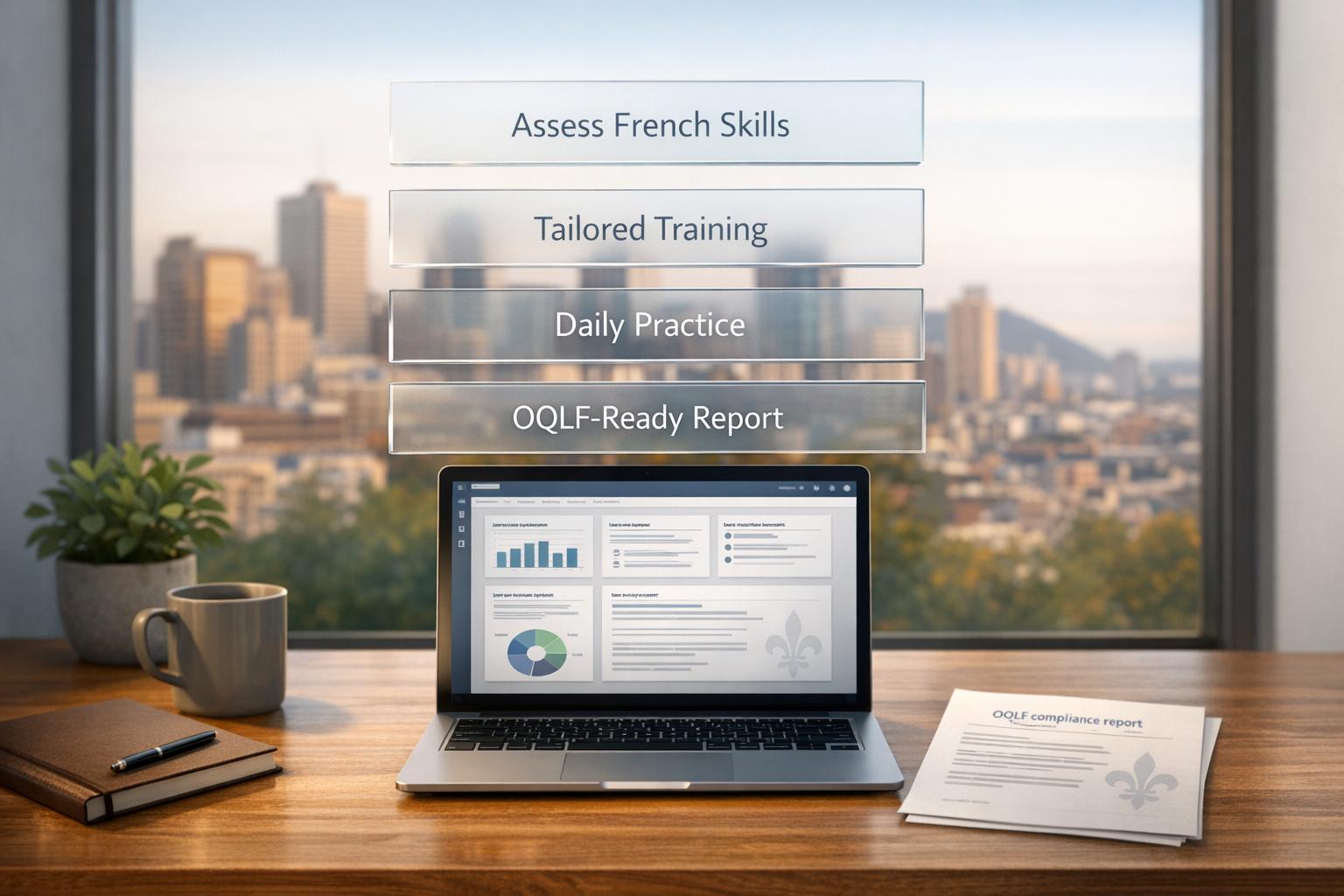
Use AI agents to meet Quebec's Bill 96: assess French skills, deploy tailored training, embed daily practice, and export OQLF-ready reports.
AI Agents for Bill 96 Compliance: A Practical Guide
Bill 96 in Quebec requires workplaces to prioritize French in all employment-related matters, including communications, contracts, and training materials. Non-compliance can result in fines ranging from $700 to $14,000, with additional penalties for repeat offences.
To meet these requirements, businesses must:
- Provide French training if requested by the Office québécois de la langue française (OQLF).
- Register with the OQLF and conduct linguistic analyses if they have 25+ employees.
- Form francization committees for companies with 100+ employees.
- Justify any job-related requirements for fluency in languages other than French.
AI tools like Francoflex can simplify compliance by:
- Assessing employees' French proficiency through automated evaluations.
- Providing tailored French language training for employees, accessible 24/7.
- Generating OQLF-compliant reports to track progress and prepare for audits.
- Integrating into daily workflows to make language practice part of regular tasks.
Steps to compliance include:
- Evaluating your company's French language needs and obligations.
- Deploying AI agents for personalized training.
- Incorporating language learning into employees' daily tasks.
- Monitoring progress with detailed reports.
- Staying updated on Bill 96 regulations and maintaining compliance.
Francoflex offers scalable solutions for businesses of all sizes, helping them meet legal requirements while improving employees' French proficiency.
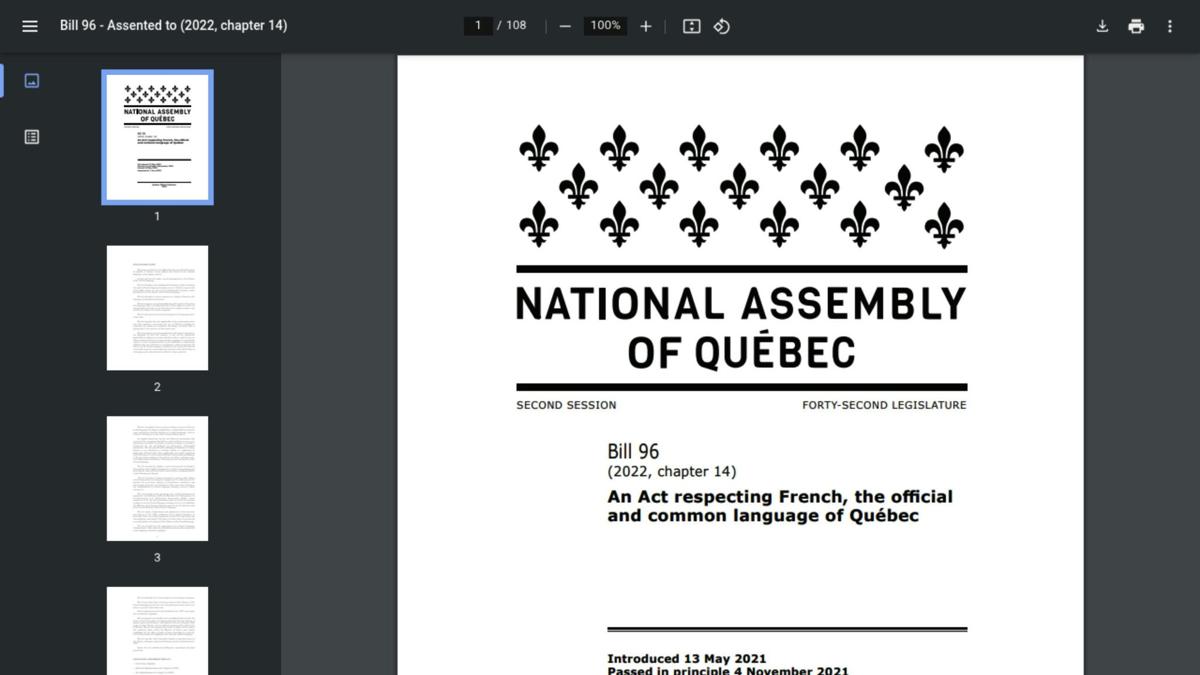
Bill 96 Overview, its objectives, key provisions, and language requirements for businesses
Step 1: Evaluate Your Compliance Requirements
::: @figure
Before diving into any training program, it's essential to assess your workforce's French language skills and understand the requirements of Bill 96. This step ensures that your efforts are focused on addressing actual compliance gaps, saving time and resources.
Assess Employee French Language Skills
Start by conducting a baseline assessment of your employees' French proficiency. Using AI diagnostic tools can simplify this process, offering instant evaluations across the four core competencies: listening, reading, speaking, and writing. These are the same areas the OQLF (Office québécois de la langue française) examines for compliance. Unlike traditional methods involving manual testing by instructors, AI tools provide immediate results and categorize employees by skill level, from beginner to advanced.
Focus these assessments on key roles first - customer-facing staff, management, HR, and employees responsible for documentation. These positions are typically under the most scrutiny during OQLF audits. Tools like Francoflex's AI agents can handle these evaluations at scale, offering instant feedback on pronunciation, grammar, and other specific gaps. This data helps create personalized training paths tailored to the professional needs of each employee.
Keep detailed records of all assessments and training progress. These documents are crucial for demonstrating "reasonable efforts" during OQLF audits and for justifying foreign worker visa renewals. If certain roles require English proficiency, ensure you have documentation proving that English is essential for those positions, as Bill 96 now mandates such justification.
Once you've mapped out employee skills, align these results with your specific compliance obligations under Bill 96.
Determine Your Bill 96 Obligations
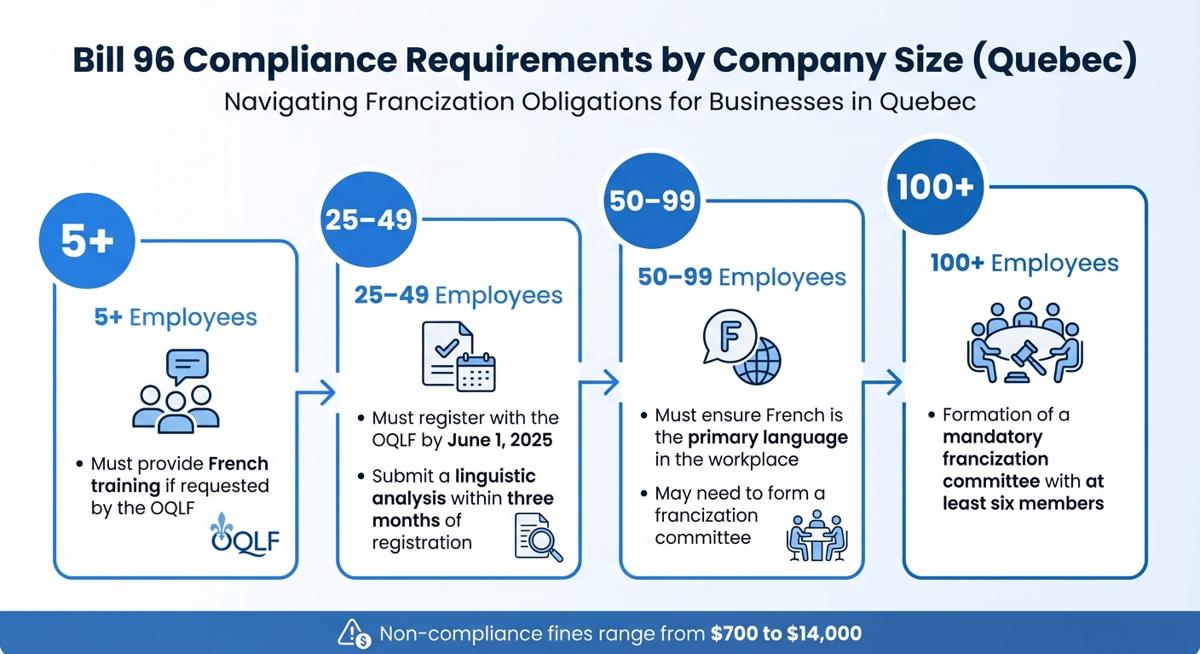
Your company's size dictates your obligations under Bill 96. Here's a quick breakdown:
| Company Size | Requirements |
|---|---|
| 5+ Employees | Must provide French training if requested by the OQLF. |
| 25–49 Employees | Must register with the OQLF by June 1, 2025, and submit a linguistic analysis within three months. |
| 50–99 Employees | Must ensure French is the primary language in the workplace and may need to form a francization committee. |
| 100+ Employees | Formation of a mandatory francization committee with at least six members. |
If your company has 25 or more employees, you'll need to register with the OQLF and submit a linguistic self-evaluation. This evaluation, due within three months of registration, should cover French usage in internal and external communications, IT systems, workplace signage, and customer service. Specifically, it should address written materials like contracts and memos, digital platforms like websites and social media, and workplace elements such as safety instructions and signage.
For regulated professions - such as law, healthcare, or engineering - you may also need to prepare employees for the official OQLF French proficiency exam. However, alternative credentials like TEF/TCF Canada tests, DELF (A1 to B2), DALF (C1 and C2), or diplomas from French-speaking regions (e.g., France, Belgium, Switzerland) are also accepted. Knowing which qualifications apply to your team will help you set achievable training goals and timelines.
Once you've completed this evaluation and documented a baseline, you'll be ready to configure AI tools for targeted, effective training.
Step 2: Set Up Francoflex AI Agents
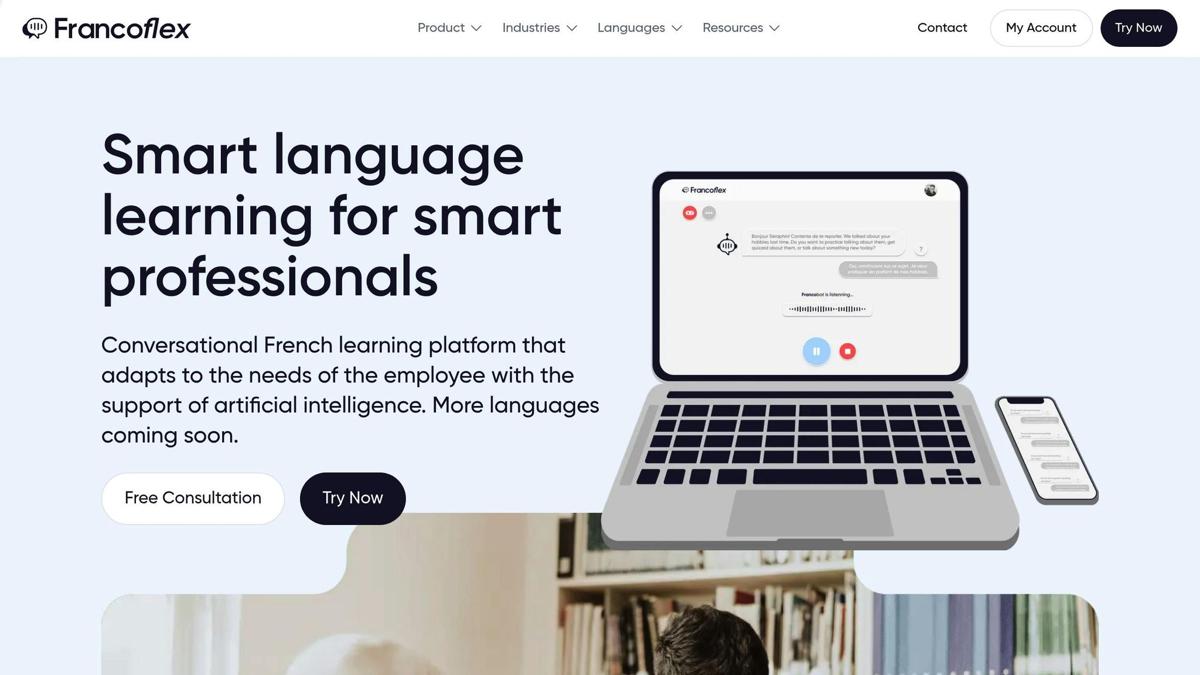
Now that compliance needs are clearly outlined, the next step is to deploy AI agents designed for your workplace scenarios. These Francoflex AI agents should be configured to meet your team's specific training requirements.
Select the Right Francoflex Plan
Start by choosing a plan that fits your team size and compliance goals: Basic, Business, or Enterprise.
- The Basic plan is ideal for teams of up to 25 employees. It includes core AI conversation tools and standard progress reporting.
- The Business plan supports 26 to 100 employees and offers additional features like workplace scenario customization and reporting aligned with the Office québécois de la langue française (OQLF) guidelines.
- The Enterprise plan is designed for larger teams, scaling to unlimited users. It includes advanced analytics, custom integrations, and dedicated audit support.
For example, a Montreal-based tech startup with 28 employees opted for the Business plan to comply with Bill 96 requirements. They used Francoflex AI agents for daily French practice integrated with customer support tasks. Over six months, they achieved an 85% improvement in proficiency, earning OQLF certification.
If your company has fewer than 25 employees but expects to grow, starting with the Basic plan and upgrading later can help you manage costs while maintaining flexibility.
"Francoflex ensures I stay compliant at a small cost." - Stéphane, Président[3]
Once you've chosen the right plan, the next step is onboarding your team and tailoring the AI agents to your needs.
Onboard Employees and Configure AI Agents
Use the Francoflex dashboard to register employees and assign profiles based on their baseline language assessments (ranging from A1 to C2). This ensures compliance with Bill 96 by aligning daily language practices with regulatory standards.
Tailor the AI agents by uploading workplace-specific materials, such as contracts, email templates, and sales scripts. This allows the agents to simulate realistic Canadian French scenarios, including Québec-specific idioms. Set progressive difficulty levels that adapt as employees improve, and track metrics like conversation hours and comprehension scores. This helps document the required 60+ training hours per employee, which is essential for businesses with 25 or more employees working on francisation plans.
To make practice seamless, integrate the AI agents into everyday tools like Slack or Microsoft Teams so that language training becomes part of regular workflows rather than an additional task. Start with a pilot group - around 10% of your team - to identify any gaps and encourage full adoption across the company.
Step 3: Add AI Agents to Daily Routines
Once your Francoflex AI agents are set up, the next step is weaving them into the fabric of daily work life. Consistency is key to making real progress toward Bill 96 compliance. By integrating French practice into everyday tasks, employees not only improve their language skills but also maintain ongoing compliance with the law.
Schedule Regular AI Conversations
Set aside 10–15 minutes each day for language practice. Use calendar reminders through tools like Google Workspace or Microsoft Outlook to keep sessions consistent without disrupting work hours. This approach aligns with Quebec's standard 37.5-hour workweek, ensuring no overtime is required. The Francoflex mobile app makes it easy for employees to complete sessions from anywhere. Research backs this up: short, daily practice sessions are far more effective for retention than longer, less frequent ones.
For workplaces with varied schedules, such as retail or manufacturing, Francoflex's 24/7 availability ensures all employees can participate. Night shift workers can practise during their shifts, while daytime staff can complete their sessions in the morning. Features like asynchronous conversation replays and voice notes allow flexibility, and managers can assign schedules tailored to their teams' needs.
Start by using the Francoflex dashboard to track employees' baseline assessments. Gradually introduce themed sessions focusing on workplace-specific vocabulary, such as customer service phrases or technical terms. Weekly metrics - like session completion rates and skill scores - help fine-tune the frequency and focus of training, ensuring alignment with OQLF francisation audits. Gamification elements, such as badges and challenges, keep employees engaged and motivated.
Once these daily habits are established, integrate language practice into actual job tasks for even better results.
Connect Language Learning to Daily Work Tasks
Taking it a step further, embedding language practice directly into job responsibilities reinforces learning and makes it more meaningful. For example, sales teams can role-play client negotiations in French using Francoflex before making real calls. Customer service representatives can practise handling inquiries through AI simulations that align with OQLF's French language requirements. Meanwhile, administrative staff can translate internal memos on the platform, applying new vocabulary in real-time.
One Montreal retailer saw impressive results by dedicating 20% of daily tasks to Francoflex. Their team achieved proficiency 25% faster compared to using standalone training sessions. They incorporated French pre-meeting summaries and post-task debriefs, which helped reinforce skills throughout the day.
Francoflex's API integration with tools like Slack and Microsoft Teams makes in-app prompts - such as "Want to summarize this in French?" - seamlessly part of the workflow. Browser extensions provide real-time vocabulary support during email drafting, while task-linked progress badges offer positive reinforcement. This approach not only supports Bill 96's requirement for French in internal communications but also transforms language learning into a natural and productive part of the workday.
"This will help my business grow as I'll be able to send my workers to client's homes knowing they can communicate properly in French." - José, Small business owner[3]
Pre- and post-implementation surveys often show a 35% boost in employee confidence, with noticeable improvements like reduced reliance on translation tools. Custom reports from Francoflex also provide the documentation needed to demonstrate progress during OQLF audits.
sbb-itb-d43bb17
Step 4: Track Progress and Prepare for Certification
Once daily routines are in place, the next step is keeping a close eye on progress to ensure compliance with Bill 96. Francoflex's reporting tools make this process smoother by offering the necessary documentation for OQLF requirements and identifying areas where extra language training might be needed.
Monitor Progress with Custom Reports
Francoflex provides personalized reports that track both individual and team progress, tailored to align with OQLF francization plans [3]. These reports include essential metrics like:
- Training hours per employee: A clear view of how much time each person is dedicating.
- Improvements in French proficiency: Tracking growth in both written and oral skills.
- Attendance logs: Ensuring consistent engagement in training sessions.
- Skill gap analysis: Highlighting areas where individuals may need extra support.
This detailed data serves multiple purposes. It not only verifies active participation for OQLF audits but also supports claims for Quebec's workforce training tax credits. Regularly reviewing these reports helps businesses address any compliance risks early and ensures everything stays on track for certification.
Prepare Documentation for OQLF Audits
For businesses in Quebec, submitting yearly progress reports to the OQLF is a requirement when running francization programs [5]. Francoflex simplifies this by automatically generating reports that meet OQLF standards [3][4].
When registering with the OQLF, companies need to complete a self-evaluation form within three months. Francoflex's initial assessment data makes filling out this form straightforward and accurate [5]. The platform captures all the critical audit elements, such as employee participation rates, skill improvements, and consistent training efforts.
For larger companies with 100 or more employees, francization committees can use these detailed reports to showcase program implementation during OQLF reviews [5]. Managers can easily export the data as PDFs or spreadsheets, organize it by department or employee, and have everything ready for both scheduled and surprise audits. This approach turns what could be a stressful process into a manageable task. Plus, maintaining this documentation ensures businesses are always prepared for compliance in the future.
Step 5: Maintain Compliance Over Time
Achieving compliance is just the beginning. Staying compliant requires continuous effort, regular data analysis, and adapting to any changes in regulations. With Bill 96, businesses must consistently meet their French language obligations, and AI tools can make this process much easier by offering ongoing insights and adapting to new requirements.
Review AI Data to Improve Training
Francoflex's AI agents play a key role in tracking employee progress in French training. Regularly reviewing this data can uncover areas for improvement and help tailor training efforts. For example, if a specific department struggles with conversational French or role-specific vocabulary, managers can adjust training schedules or introduce exercises that directly address these gaps.
"Maintaining detailed records of French-language access - whether written or spoken - enables organizations to clearly prove compliance during OQLF audits." (Interprefy) [2]
Monthly reviews of AI-generated metrics - such as conversation frequency, skill development, and engagement levels - allow businesses to refine their training strategies proactively. For larger companies with 100 or more employees, francization committees can conduct these reviews every six months to ensure the program stays on track [1].
Monitor Bill 96 Regulatory Updates
Keeping up with regulatory updates is just as important as daily training. Since Quebec's language laws are subject to change, businesses must stay informed to avoid penalties. AI agents can be programmed to automatically track updates to Bill 96 and related OQLF regulations. This automation not only saves time but also ensures that no critical updates are overlooked - especially valuable when businesses already spend around 1.34% of their total labour costs on compliance tasks [6].
When new rules are introduced, AI agents can interpret these changes and translate them into actionable updates for employee training and internal procedures [6]. To stay aligned with current standards, businesses should also review their French-language documents - like contracts, forms, and policies - on a quarterly basis. Similarly, digital assets such as websites and social media content should be audited monthly to ensure compliance across all customer interactions.
"Advanced AI agents could also help reduce compliance costs by... keeping abreast of updates in the regulatory and legal landscape." (Institute for Law & AI) [6]
Francoflex's reporting tools simplify this process by generating updated, OQLF-compliant documentation whenever regulations change. By combining automated monitoring with regular internal reviews, businesses can maintain compliance with minimal manual effort.
Conclusion
This guide outlines a straightforward five-step method for achieving francisation while staying compliant with Bill 96. The process - assessing your needs, deploying AI agents, embedding training into daily routines, monitoring progress, and ensuring ongoing compliance - makes it possible to create a scalable French training program that doesn't disrupt your operations.
Francoflex's AI agents tackle the specific challenges faced by businesses in Quebec. They provide 24/7 access, real-time feedback, and automated OQLF-ready reports, all without the scheduling hassles or high costs of traditional classroom training. Whether you have a team of 5 or 5,000, the platform integrates seamlessly with your existing workflows. As Stéphane, Président, shared: "The new language laws are really affecting my small business. Francoflex ensures I stay compliant at a small cost." [7] This seamless integration not only helps employees improve their French skills but also prepares them for certification.
José, a small business owner, emphasized the broader benefits: "This will help my business grow as I'll be able to send my workers to client's homes knowing they can communicate properly in French." [7] Better French proficiency doesn't just ensure compliance - it also strengthens your team's ability to serve Quebec's francophone market and enhances your business's competitive edge.
FAQs
How can Francoflex AI agents support my business in meeting Bill 96 requirements?
Francoflex AI agents provide customized French language training tailored to workplace needs, helping your business align with Bill 96 requirements. Employees can practise daily with AI-driven conversations, improving their French skills for internal communication, customer interactions, and public-facing materials.
These tools also feature progress tracking and certification support, simplifying the process of preparing for OQLF audits. With the June 2025 compliance deadline approaching, Francoflex solutions help your business stay on track. By adopting these tools, you can strengthen communication, avoid penalties, and confidently meet Quebec's language regulations.
What are the compliance requirements under Bill 96 for businesses of different sizes?
Under Bill 96, businesses in Quebec must adhere to specific French language rules depending on their size:
- 5 or more employees: Employers are required to offer French training upon request. Additionally, French must be the main language used for workplace communications, documentation, and customer interactions.
- 25 or more employees: Companies need to submit language compliance documentation to the Office québécois de la langue française (OQLF). Internal policies, training materials, and digital content must also be primarily in French.
- 50 or more employees: A francization committee may need to be established to monitor and ensure compliance. Employment agreements and related documents must be provided in French, with translations into other languages permitted only if all parties agree.
These guidelines highlight the importance of prioritizing French in workplace operations, from training to documentation, to comply with the law and avoid potential penalties.
How does Francoflex make language training part of daily work routines?
Francoflex weaves language learning into the fabric of daily work life by offering AI-powered, personalized conversations that align with each employee's specific role and industry. This means employees can sharpen their French communication skills while performing their regular tasks, keeping the learning process both relevant and practical.
The platform also includes customized progress tracking and tools to help businesses align with Bill 96 compliance requirements. By integrating language training into everyday workflows, Francoflex enables employees to boost their French proficiency without compromising their productivity.

![Cover Image for Corporate Language Training Costs: Conversaflex vs. Tutors, Classes and Apps [2026]](/_next/image?url=%2Fassets%2Fimages%2Fblog%2F68b2425f68bb5e38327dcb5b-1756542781388.jpg&w=3840&q=75)
![Cover Image for Free French Level Tests Compared: Which Online Test Should You Take? [2026]](/_next/image?url=%2Fassets%2Fimages%2Fblog%2F6a6becec2f6aeb480bfeb3ba-1785462442187.jpg&w=3840&q=75)
![Cover Image for How Many Levels Are There in French? CEFR A1–C2, Quebec 1–12 & DELF Explained [2026 Guide]](/_next/image?url=%2Fassets%2Fimages%2Fblog%2F6a6947cb2f6aeb480bfe8ceb-1785289880998.jpg&w=3840&q=75)